
Honkai: Star Rail Team Compositions Ranked for 2026 Meta
Honkai: Star Rail team building and team archetypes offer thrilling tactical depth, empowering players with flexible, strategic choices for every challenge.
In the ever-evolving landscape of Honkai: Star Rail, the strategic assembly of a team remains the cornerstone of success, from navigating the main storyline to conquering the most challenging endgame content. With a roster that has expanded significantly since the game's launch, now featuring well over 60 unique characters as of 2026, new and veteran players alike are presented with a wealth of tactical possibilities. A coherent team, typically structured around a sustain unit, one or two primary damage dealers (DPS), and supporting characters, is not just a recommendation but a necessity for progression. But with so many potential synergies and playstyles, which team archetypes stand out in the current meta? The answer lies in understanding the strengths, investment requirements, and unique mechanics of each composition.
5️⃣ Dual DPS Teams: The Flexible Foundation
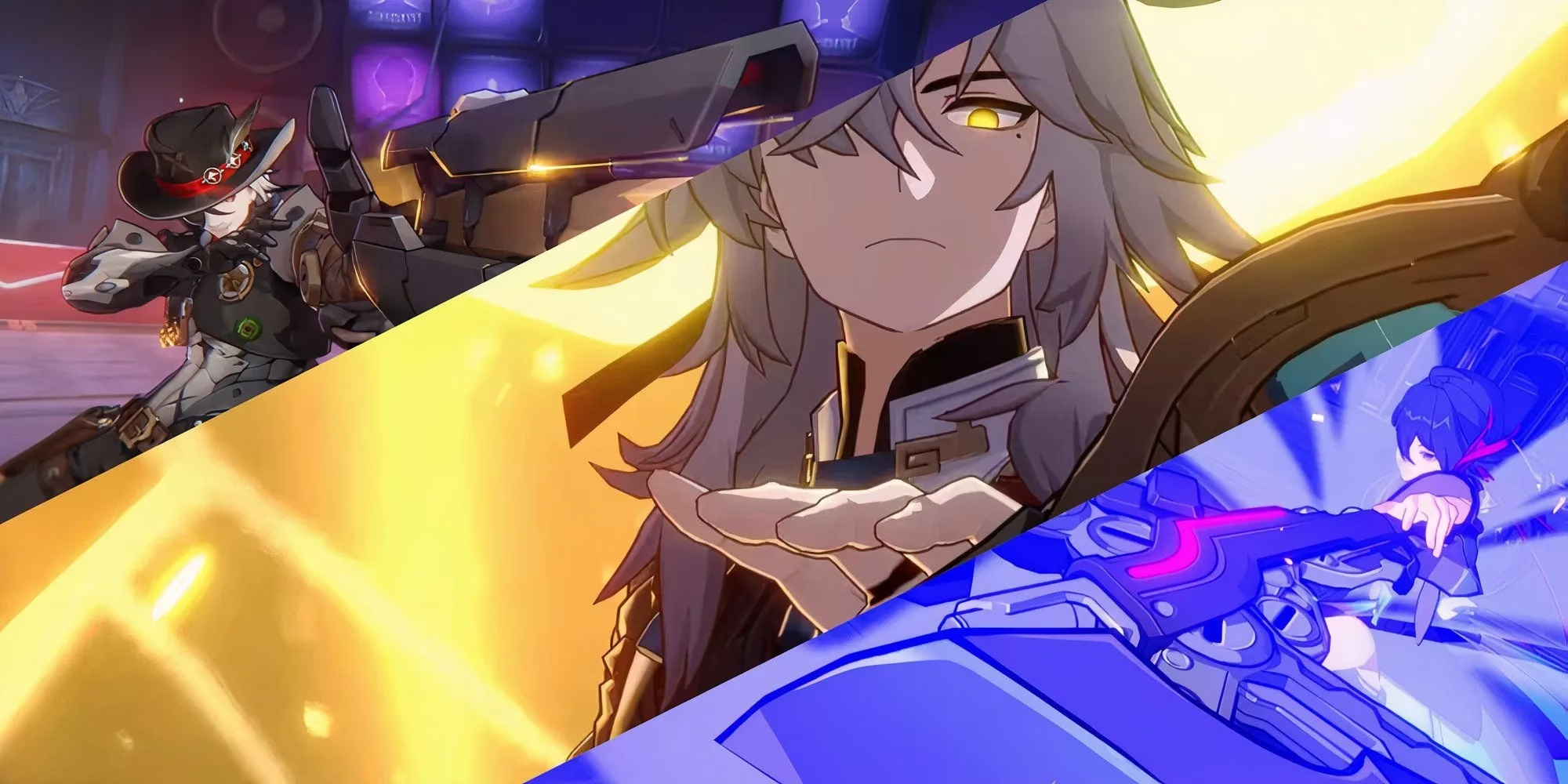
This ranking might come as a surprise, given that many teams incorporate secondary damage sources. However, true Dual DPS teams—those built around two primary damage dealers without a specialized, shared mechanic—are relatively rare. Why is that? True synergy between two main DPS characters is difficult to achieve unless they both specialize in a specific system, like Damage Over Time (DoT). For instance, a team with Blade and Jingliu capitalizes on their unique interaction: Jingliu's HP-draining skills actively fuel Blade's talent, creating a symbiotic damage loop. Similarly, a team featuring Acheron alongside a damage-built Silver Wolf can blur the lines, though it often leans more toward a hypercarry setup.
The primary advantage of Dual DPS teams is their lack of strict rules. They offer unparalleled freedom, allowing players to field their favorite characters together based on personality or design rather than pure meta synergy. This makes them ideal for casual enjoyment. The trade-off, however, is clear: these teams often lack the focused power of more specialized compositions, making endgame content like Memory of Chaos or Apocalyptic Shadow notably more challenging without significant investment in both damage dealers.
Key Traits of Dual DPS Teams:
-
🎯 Playstyle: Flexible, character-driven.
-
⚙️ Build Priority: High investment in two DPS characters' CRIT and ATK stats.
-
✅ Pros: High freedom, fun for casual play, utilizes favorite characters.
-
❌ Cons: Lower synergistic ceiling, harder in endgame, inefficient skill point usage.
4️⃣ Hypercarry Teams: The Classic High-Risk, High-Reward Strategy
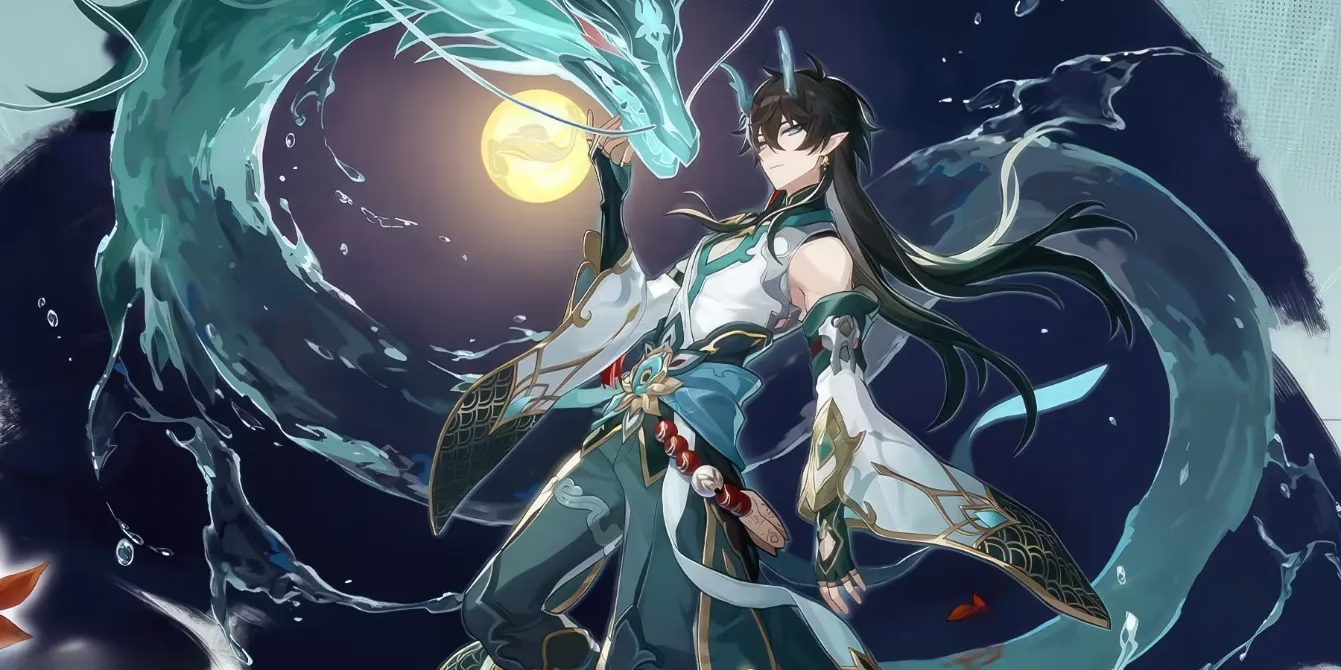
As one of the only meta teams available at the game's release, the Hypercarry archetype is a timeless, though demanding, strategy. Its core premise is simple yet potent: funnel all resources and buffs into a single, monumental damage dealer. But is concentrating all your power in one character still a viable strategy in 2026? The answer is yes, but it comes with significant caveats. When equally invested, the difference in effectiveness between top team types is minimal, yet hypercarry teams are notoriously difficult to optimize.
The entire strategy hinges on one character's performance. If the main DPS has suboptimal CRIT stats or misses a crucial critical hit, an entire combat rotation can feel wasted. This demands extensive "min-maxing" of gear—a tedious and time-consuming process. Furthermore, the team's success is equally dependent on its supports. These characters must not only provide powerful buffs but also maintain high Speed (SPD) stats to generate skill points efficiently for the hypercarry's expensive attacks. Without fast, well-built supports, the team's engine stalls.
Hypercarry Team Composition Example:
| Role | Character Example | Key Function |
|---|---|---|
| Main DPS | Imbibitor Lunae, Jingliu | Deals the vast majority of team damage. |
| Support | Bronya, Sparkle | Provides massive damage buffs and action advances. |
| Support | Tingyun, Hanya | Supplies energy and attack buffs or skill points. |
| Sustain | Luocha, Fu Xuan | Heals or shields to keep the team alive. |
3️⃣ Follow-Up Attack Teams: The Symphony of Synergy
Follow-up attack teams offer some of the most visually satisfying and potent gameplay in Honkai: Star Rail. However, they present a notable barrier to entry. Why are they considered difficult to build? They often require multiple characters—sometimes two or even three—to be built with strong CRIT ratios, and the roster of effective 4-star follow-up attackers is limited, pushing players toward coveted 5-star units like Topaz, Numby, Dr. Ratio, and Aventurine.
Yet, for those who overcome the initial hurdle, the rewards are immense. These teams excel at weakness breaking due to the sheer volume of attacks they unleash, and each trigger feels impactful. The synergy is deep: characters like Topaz can mark enemies to increase follow-up damage taken, while Aventurine's shields can trigger his own follow-up attacks. This creates dynamic, interlocking rotations that are both powerful and engaging. Teams can be tailored for specific content; for example, Himeko and Herta compositions dominate Pure Fiction, while Aventurine/Dr. Ratio/Topaz shines in single-target focused modes.
Follow-Up Team Mechanics:
-
🔄 Core Concept: Chain multiple extra attacks after meeting specific conditions.
-
🛡️ Toughness: While individual follow-up hits have lower toughness damage, the frequency compensates, leading to efficient weakness breaks.
-
🎮 Gameplay: Fast-paced, interactive, and highly rewarding when optimized.
2️⃣ Damage Over Time (DoT) Teams: Reliable but Restricted
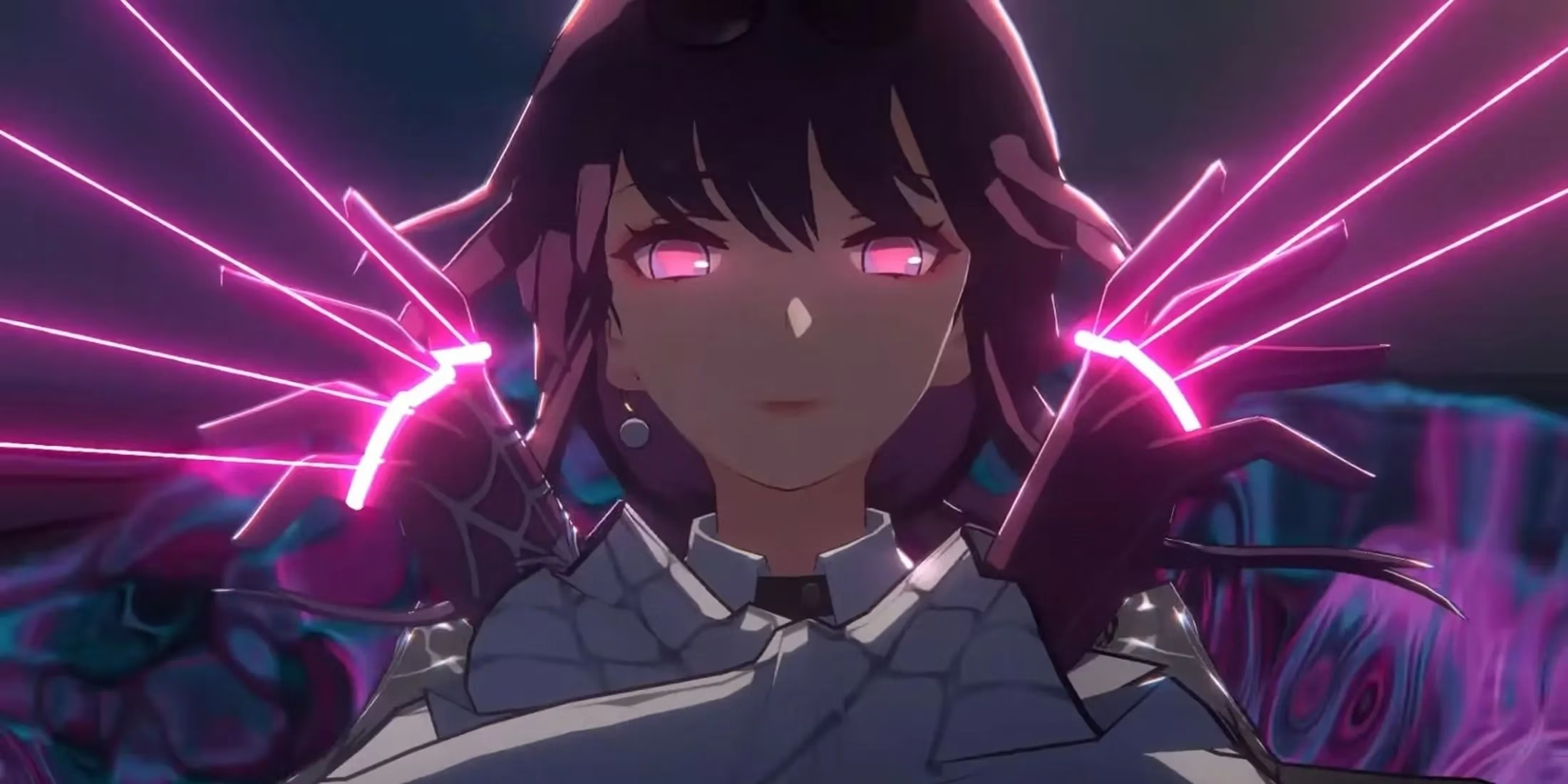
DoT teams represent a paradigm of consistent, relentless damage. Their greatest strength—reliability—is also the source of their main weakness. How can a team be both supremely reliable and restricted? The answer lies in one character: Kafka. She is the irreplaceable engine of every top-tier DoT composition, as her ability to detonate damage-over-time effects immediately bypasses the need to wait for enemy turns. This mechanic is what defines the modern DoT playstyle.
The premier partnership is Kafka with Black Swan. Black Swan's unique Arcana stacks, which are amplified by any DoT on the enemy, create a damage multiplier that other DoT units cannot match. This creates a bottleneck: for maximum reliability and power, the core of this team requires three limited 5-star characters (Kafka, Black Swan, and a dedicated support like Ruan Mei). While substituting a third DoT unit for a support is possible, it generally yields less stable results. However, once this premium core is assembled, the team delivers exceptional performance across virtually all endgame content, burning through enemies with predictable efficiency.
1️⃣ Break Effect Teams: The Reigning Meta Powerhouse
Topping the ranking for 2026 are Break Effect teams, a relatively new archetype that has fundamentally shifted the meta. Despite facing a notable lack of specialized support characters and a limited pool of dedicated Break DPS units, this composition's power is undeniable. What does its success say about its fundamental design? It proves that leveraging a core game mechanic—the Weakness Break system—can lead to dominance.
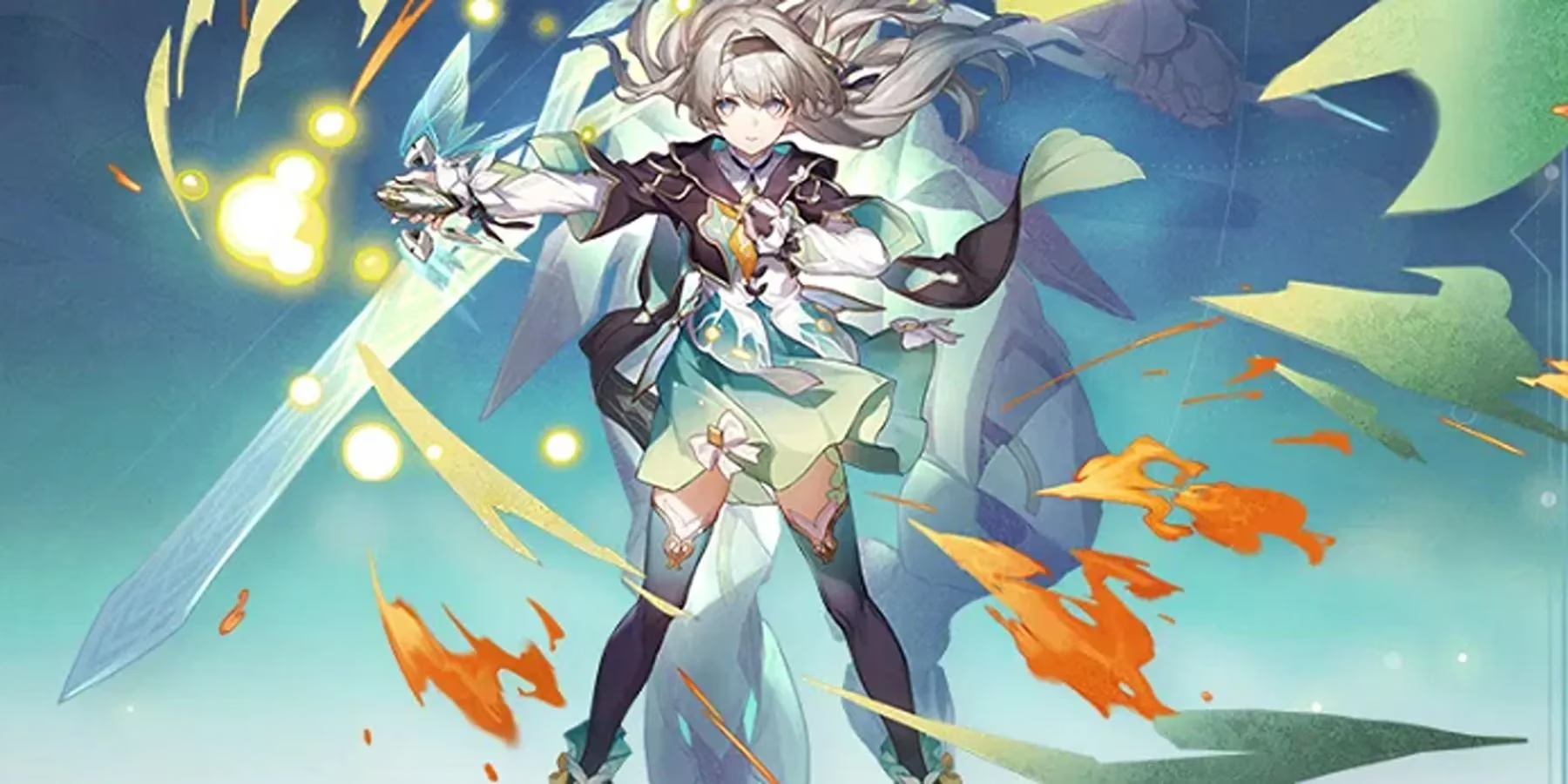
The introduction of the Super Break mechanic was a game-changer. It adds substantial extra damage when attacking a weakness-broken enemy, scaling directly with the attacker's Break Effect stat. This simplifies building priorities: focus overwhelmingly on Break Effect and Speed. Characters like Firefly and the soon-to-be-released units in later versions are designed to exploit this, dealing astronomical damage even with relic sets that would be considered subpar for other DPS roles.
Speed is crucial to ensure the team breaks enemy toughness bars rapidly, triggering the Super Break window as often as possible. While the character options may be fewer, their specialization makes them incredibly potent. This focused efficiency, combined with damage that bypasses traditional defense scaling, suggests Break teams will remain a top-tier strategy for the foreseeable future, cementing their place as the most powerful and future-proof team composition in the current Honkai: Star Rail meta.
Final Thoughts
Ultimately, the "best" team in Honkai: Star Rail is the one that aligns with a player's available characters, investment capability, and preferred playstyle. While Break and DoT teams currently offer the highest ceilings for endgame content, Hypercarry and Follow-up teams remain fiercely competitive and deeply satisfying to master. The Dual DPS approach continues to provide a valuable entry point for casual collaboration. As the game continues to expand in 2026, understanding these foundational archetypes is the first step toward building a roster capable of conquering any challenge the cosmos throws your way. 🚀
Comments